Raw Feeding FAQs: Everything You Need to Know
Raw feeding has become increasingly popular among dog owners looking to provide a natural, nutritious diet for their pets. However, if you’re new to raw feeding, it’s normal to have questions.
We’ve compiled some of the most frequently asked questions to help you better understand the benefits of feeding raw and how to get started.
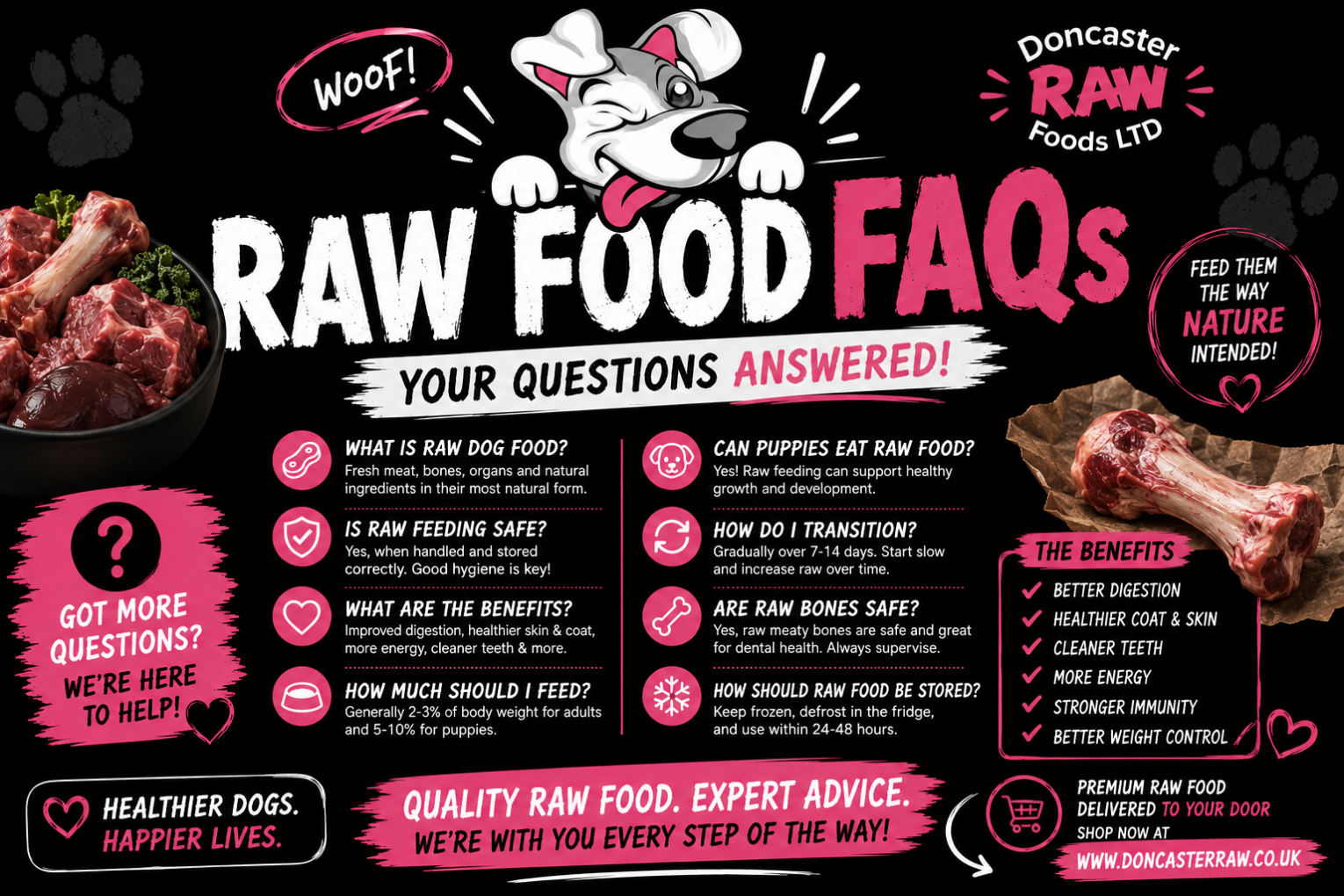
What Is Raw Dog Food?
Raw dog food typically consists of fresh meat, bones, organs, and other natural ingredients that closely resemble what dogs would naturally eat in the wild.
Unlike heavily processed foods, raw diets focus on providing nutrient-rich ingredients in their natural state.
Is Raw Feeding Safe?
Yes, when handled and stored correctly, raw feeding is safe for healthy dogs.
Like any fresh food product, raw food should be:
- Kept frozen until needed
- Defrosted in the refrigerator
- Served fresh
- Prepared using good hygiene practices
Always wash hands, bowls, and preparation surfaces after handling raw food.
What Are the Benefits of Feeding Raw?
Many dog owners report noticeable improvements after switching to a raw diet, including:
- Improved digestion
- Smaller, firmer stools
- Healthier skin and coat
- Cleaner teeth and fresher breath
- Increased energy levels
- Better weight management
- Improved muscle tone
Every dog is different, but many owners notice positive changes within a few weeks.
How Much Raw Food Should I Feed My Dog?
The amount depends on several factors, including:
- Age
- Weight
- Activity level
- Breed
- Metabolism
As a general guide:
- Adult dogs: 2%–3% of body weight daily
- Puppies: 5%–10% of body weight daily
If you’re unsure, our team can help recommend suitable feeding amounts.
Can Puppies Eat Raw Food?
Absolutely.
Many owners choose to start puppies on a raw diet from an early age. Raw feeding can support healthy growth and development when balanced appropriately.
Puppies typically require more frequent meals and larger portions relative to their body weight than adult dogs.
Can I Mix Raw Food with Dry Food?
Many owners do successfully combine raw and dry food.
However, some prefer feeding them separately due to differences in digestion rates.
If you’re transitioning to raw feeding, introducing raw gradually can help your dog adjust comfortably.
How Do I Transition My Dog to Raw Food?
Most dogs can switch gradually over 7–14 days.
A simple approach is:
Days 1–3
25% Raw Food / 75% Current Food
Days 4–6
50% Raw Food / 50% Current Food
Days 7–9
75% Raw Food / 25% Current Food
Day 10+
100% Raw Food
Some dogs may switch immediately, while others benefit from a slower transition.
Do Dogs Need Vegetables on a Raw Diet?
Dogs are primarily carnivorous but can benefit from certain fruits and vegetables in moderation.
Many complete raw meals already contain balanced ingredients to support overall nutrition.
Are Raw Bones Safe?
Raw meaty bones can provide enrichment and help support dental health.
Important:
✔ Feed raw bones only
✔ Choose appropriate sizes for your dog
✔ Always supervise chewing
✘ Never feed cooked bones, as they can splinter
If you’re unsure which bones are suitable, ask us for advice.
Will Raw Feeding Make My Dog Aggressive?
No.
There is no scientific evidence that feeding raw food causes aggression.
Behaviour is influenced by factors such as training, genetics, socialisation, and environment—not whether a dog eats raw food.
Is Raw Feeding More Expensive?
The cost varies depending on the products chosen and the size of your dog.
Many owners find the investment worthwhile because of the potential benefits to their dog’s health and wellbeing.
We regularly offer promotions and bundle deals to help make raw feeding affordable.
How Should Raw Food Be Stored?
Raw food should be:
- Stored frozen
- Defrosted in the fridge
- Used within 24–48 hours after thawing
- Kept separate from human food where possible
Always follow storage instructions provided with the product.
Can Senior Dogs Eat Raw Food?
Yes.
Many senior dogs thrive on a raw diet due to its digestibility and high-quality ingredients.
As dogs age, maintaining muscle mass and a healthy weight becomes increasingly important, and a balanced raw diet can help support these goals.
Where Can I Buy Quality Raw Dog Food?
At Doncaster Raw Foods, we stock a wide range of premium raw dog food products, natural treats, raw meaty bones, and feeding essentials to help dogs of all ages enjoy a natural diet.
Whether you’re just starting out or have been raw feeding for years, we’re always happy to offer advice and support.
Final Thoughts
Raw feeding doesn’t have to be complicated. With the right information and quality products, it can be a simple and rewarding way to support your dog’s health.
If you have any questions that aren’t covered here, feel free to get in touch with our team.
We’re always happy to help.
Healthier Dogs. Happier Lives.
Feed Them The Way Nature Intended.